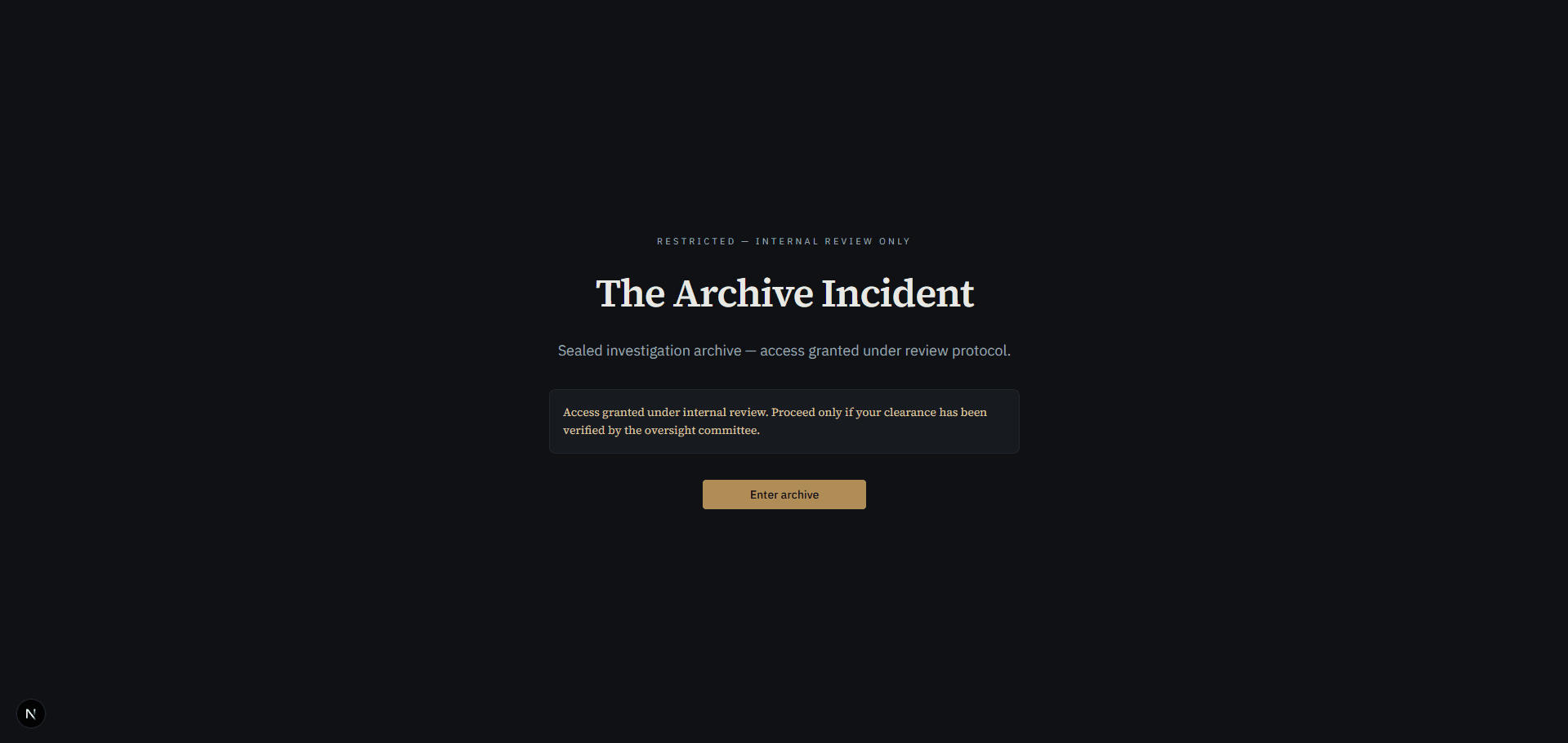
Next.js + PixiJS — early development
The Archive Incident
Project details
- Category
- Puzzle game
- Stack
- Next.js · PixiJS · TypeScript
- Status
- Early development
About
A semi-hard puzzle experience built with Next.js and PixiJS. Players piece together clues inside a digital archive. Early in development.
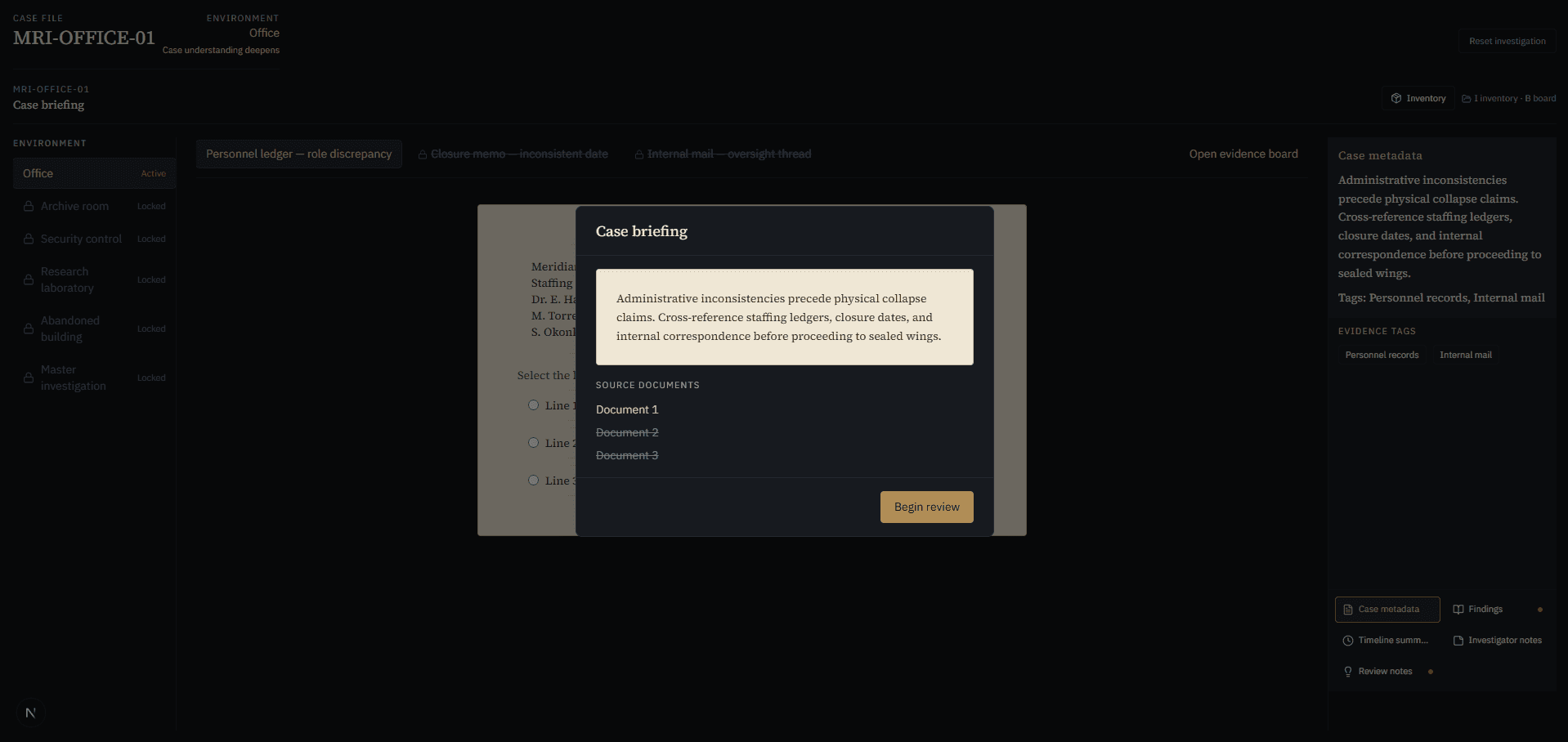
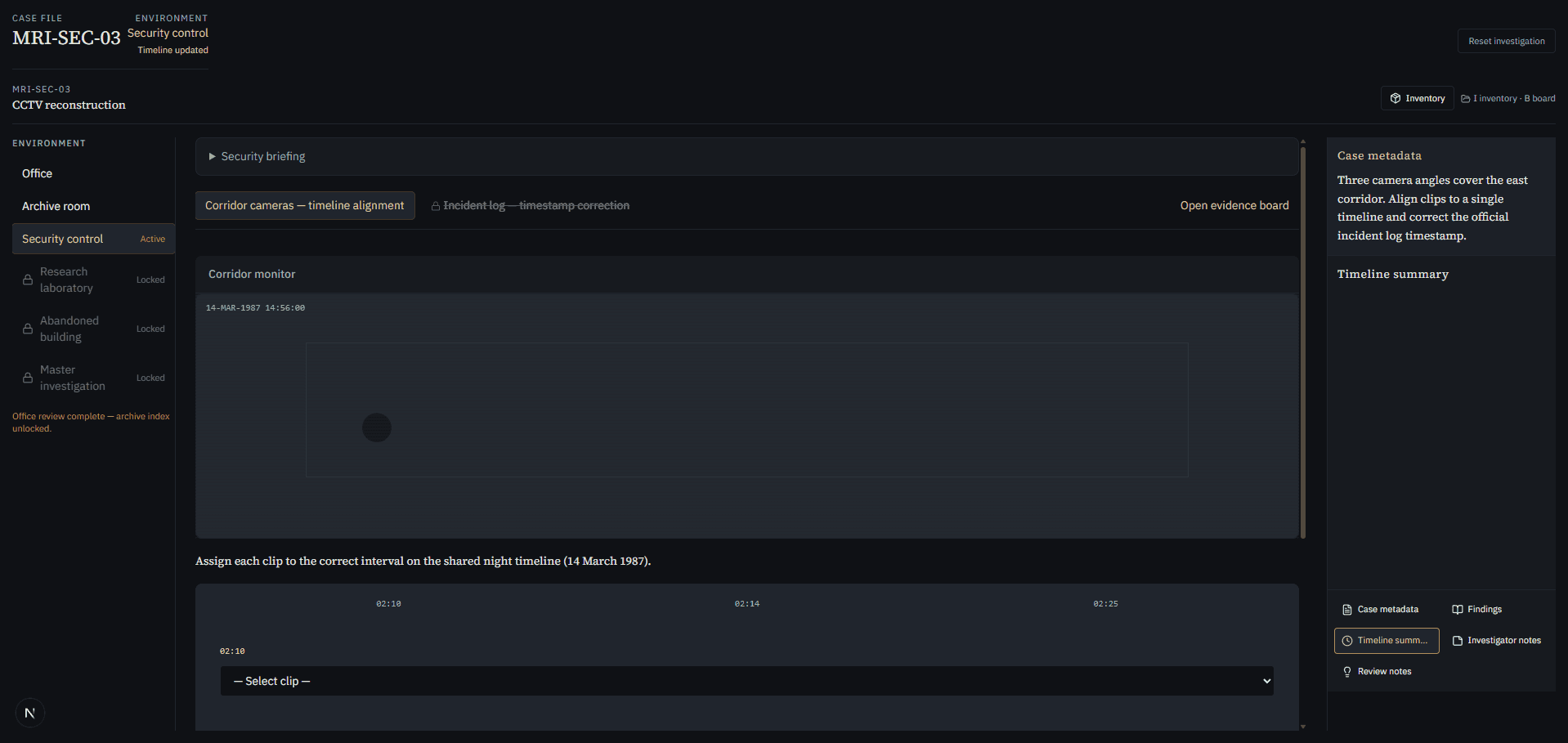
Case study — The Archive Incident
Role
Solo developer — puzzle design, PixiJS scene layers, Next.js app integration
Problem
I needed a puzzle experience that felt spatial and tactile on the web, not just a form with riddles. Clues had to connect across screens while difficulty stayed semi-hard — challenging without opaque logic leaps.
Approach
PixiJS renders the archive scenes and interactive hotspots; Next.js owns navigation, content, and future save states. Puzzles are authored as linked clue chains so players assemble understanding over multiple views rather than one modal answer.
Outcome
The Archive Incident is in early development with core scene navigation and initial puzzle chains playable. It proves the split stack: PixiJS for presence, Next.js for structure.
Key learnings
- Semi-hard puzzles need fair foreshadowing — every clue should point forward and backward.
- Splitting render (PixiJS) from app shell (Next.js) keeps iteration fast on both sides.
- Archive fantasy sells mystery best when the UI looks mundane and the gaps feel intentional.